
Gender Neutral Bathrooms: What Should You Know?
Providing a safe, accessible place for every group in society to go to the bathroom seems simple, right? Well, why is it such a hot topic in places around the world? We look further into why gender-neutral bathrooms could be a positive change for all members of society, including someone with a disability and their carer.
Why are Gender Neutral Bathrooms Important?
Feeling safe and comfortable when using the bathroom is usually something we do not need to think twice about. If we are out for dinner, at a movie or travelling around the city for the day, we do not let the availability of bathrooms affect where we will go. What about those who do? For some people, having access to gender-neutral bathrooms is the only way they can feel safe enough to go about their business. Gender-neutral bathrooms, disabled access or not, allow use by a wider range of people. This means everyone can live in a fairer and safer world, especially marginalised groups.
Who Needs Them?
As the name suggests, those who do not conform to a gender and transgender members of society will benefit from having access to gender-neutral bathrooms, which also provides a safe space for other groups, too. These groups include but are not limited to people with disability and their carers of the opposite gender, and families with one parent. Everyone may use these bathrooms, regardless of gender or situation. As always, they must also be accessible and meet such requirements.

Single Stall or Multi Stall?
Gender-neutral bathrooms address the challenges of many different people, including getting changed in a safe and comfortable environment with room for assistance if needed. An example of a benefit of a single-stall gender-neutral bathroom includes someone with a disability accessing the space with a carer of another gender. Access to a single-stall, gender-neutral bathroom would make it easier to assist and, hence, a more comfortable and safe environment for both parties.
Multi-stall benefits include less waiting time and more availability for more members of the public. A mix of both single-stall and multi-stall gender-neutral bathrooms may be a good option, providing better accessibility and privacy as well as less waiting time and more stall availability for those who do not require maximum privacy or accessible options.
How to Spot a Gender Neutral Bathroom
As gender-neutral bathrooms grow in popularity, you may be wondering how to spot one quickly and easily when out and about. You can always ask those around you or keep an eye out for the following things.
Where signs are required, they must remain accessible, with a clear image, text and braille. If you are on the lookout for a gender-neutral bathroom, some signs you may be in the right place include non-gendered images, instead replaced with images of what is inside, such as a picture of a toilet, an ambulant toilet or urinal. These images assist people in deciding which bathroom best suits their needs.
Including an image of the facility rather than a gender is an increasingly popular way to identify gender-neutral bathrooms, which includes removing words such as unisex or gender-neutral. Regardless of whether those using the facility associate with a gender, removing wording and specific imagery may help to achieve inclusivity for all. This also aids the bathrooms in remaining more user-friendly, broadcasting them as a safe space. Examples of 3 different signs, designed by the Disability Access Consultants, are below:
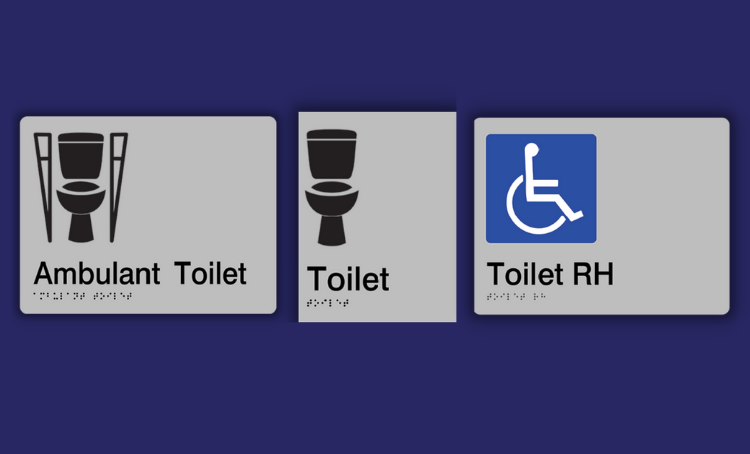 Three gender-neutral sign designs by the Ability Consultants Australia.
Contact:
Need a chat? QLife provides Australia-wide anonymous, LGBTI peer support and referral for people wanting to talk about a range of issues, including sexuality, identity, gender, bodies, feelings or relationships.


